What Drawings Are Required for Residential Permits in DFW?
At G. Lamb Engineering, we design complete residential permitting drawings for homeowners across the Dallas–Fort Worth area, creating clear, code-compliant plan sets that help projects move through municipal review without unnecessary delays.
If you’re planning a renovation, addition, or structural change to your home, one of the first questions you’ll face is what drawings are required to obtain a permit. Cities throughout DFW have strict submittal standards, and incomplete or unclear plans are one of the most common reasons permits get delayed or rejected. Understanding the required residential permit drawings DFW municipalities expect can save time, money, and frustration before construction even begins.
Residential permit drawings required for DFW municipalities
Most cities in the Dallas–Fort Worth metroplex require a coordinated set of architectural and structural documents for residential permits. These drawings communicate exactly what will be built, what will be removed, and how the home will remain structurally sound once the work is complete.
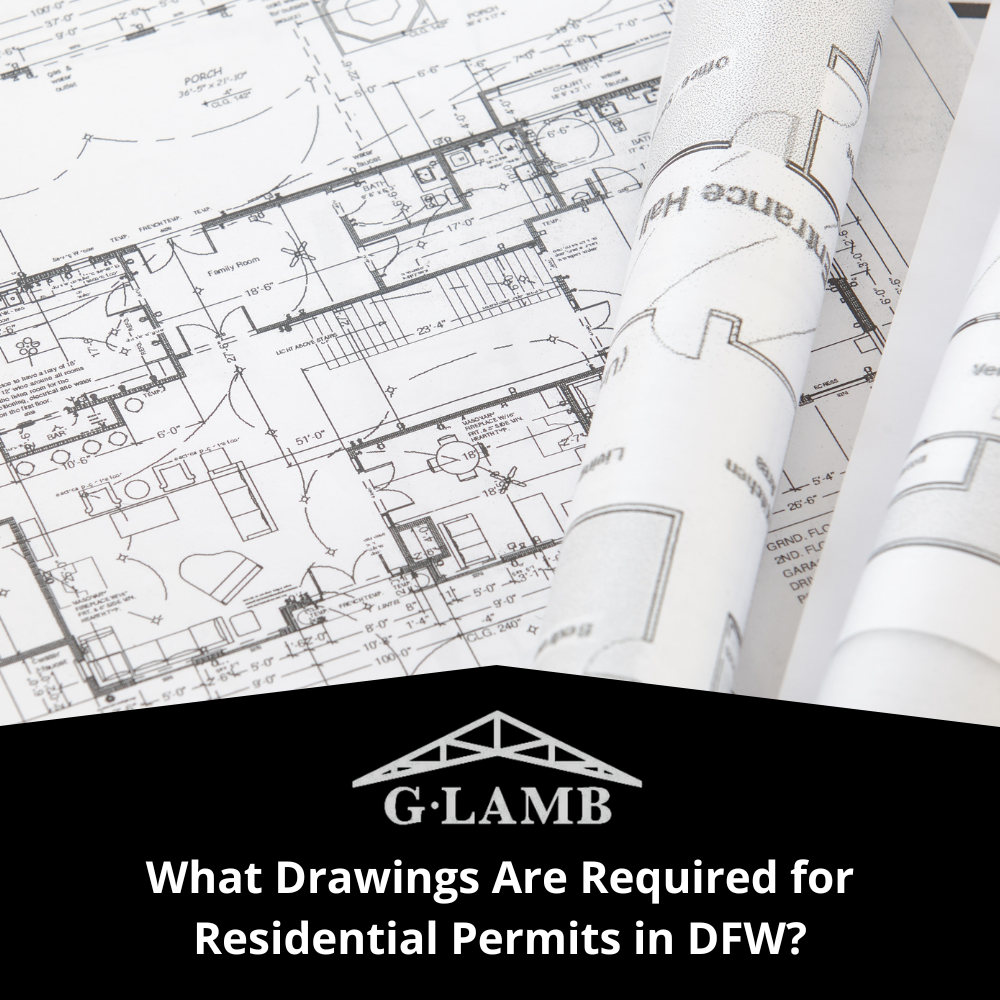
At a minimum, permit submittals typically include a cover sheet, site plan, existing and proposed floor plans, and supporting construction notes. These documents must be drawn to scale and formatted to meet local submittal standards. Even small projects can require multiple sheets when structural changes are involved.
Because requirements vary slightly by city, having experience with local permitting departments helps ensure nothing is missed during the application process.
Architectural plans Dallas homeowners need for approval
Architectural plans Dallas building departments review focus on layout, life safety, and zoning compliance. These drawings clearly show how the renovated or added space will function within the existing home.
Common architectural drawings required for permits include:
- Existing and proposed floor plans
- Demolition plans identifying removed walls or features
- Exterior elevations showing changes to height or appearance
- Door, window, and room schedules
- Electrical and lighting layouts when applicable
These plans allow plan reviewers to verify setbacks, egress requirements, room sizes, and overall code compliance. When architectural plans are incomplete or unclear, reviewers often request revisions, which slows the permitting timeline.
Engineering plans for permits involving structural changes
Any project that alters the structure of a home requires engineering plans for permits. Structural drawings show how loads are supported and transferred safely to the foundation, especially when walls are removed or additions are built.
Engineering plans commonly include:
- Foundation plans and details
- Framing plans for floors, walls, and roofs
- Beam, header, and column sizing
- Bracing and connection details
In DFW, expansive soils and aging housing stock make proper structural design especially important. Cities rely on engineered drawings to confirm that renovations meet current safety standards, even when working within older homes.
Projects that almost always require engineered drawings
While some cosmetic updates can move forward without engineering, many common renovation projects require stamped structural plans. Homeowners are often surprised by how quickly engineering becomes necessary.
Projects that typically require engineering include:
- Removing or modifying load-bearing walls
- Adding square footage or changing rooflines
- Converting garages or attic spaces
- Addressing foundation movement or repairs
- Installing large beams or structural openings
Having engineering plans prepared early helps contractors price accurately and prevents design changes during construction that can trigger additional permitting reviews.
Coordinating drawings for smoother permit review
One of the most important parts of permit drawings is coordination. Architectural and structural plans must align clearly so reviewers can follow the scope of work without confusion. Mismatched layouts, missing notes, or conflicting dimensions often lead to rejection or multiple review cycles.
When drawings are coordinated from the start, the permitting process becomes more predictable. Contractors can build directly from approved plans, inspectors know what to verify in the field, and homeowners avoid unexpected change orders tied to plan revisions.
What homeowners care about during the permitting process
Most homeowners care less about the technical details and more about timing, clarity, and cost control. Permit delays can impact contractor schedules and increase overall project expenses. Clear residential permit drawings DFW cities accept the first time help avoid those setbacks.
Homeowners also want confidence that their project meets code requirements. Proper drawings protect not only safety but also future resale value, ensuring that renovations are documented and approved by the city.
Another key concern is knowing who is responsible for addressing city comments. Working with a firm experienced in permitting means revisions and responses are handled efficiently without placing that burden on the homeowner.
Supporting construction beyond permit approval
Permit drawings are not just paperwork; they are construction tools. Well-prepared architectural and engineering plans guide the build and reduce questions once work begins. When unexpected conditions arise, having a firm familiar with the project allows for quick clarifications or revised details.
Mid-construction inspections and certification letters may also be required by some municipalities. These services help confirm that construction matches the approved plans before final inspections are scheduled.
Clear permitting plans built for residential renovations
If you’re looking for guidance on engineering plans for permits or need complete architectural plans Dallas municipalities will approve, G. Lamb Engineering is here to help. We specialize in residential renovations, additions, and alterations, creating permit-ready drawing sets designed for smooth reviews and efficient construction. By combining architectural design and structural engineering under one roof, we simplify the permitting process and keep your project moving forward with confidence. Get the help you need to turn your renovation plans into approved, buildable documents without unnecessary complications.