Residential Engineering for Home Renovations in Dallas–Fort Worth
We provide complete residential engineering and architectural design services for home renovations across the Dallas–Fort Worth area, helping homeowners move from concept to construction with clear plans that meet municipal permitting requirements and reduce costly surprises.
Planning a renovation is exciting, but it can also feel overwhelming when structural concerns, city codes, and construction logistics come into play. Many homeowners know what they want their space to look like but are unsure how to make those changes safely and legally. This is where working with a residential engineer DFW homeowners trust becomes essential. At G. Lamb Engineering, our focus is on existing homes, which allows us to guide renovation projects with practical solutions that keep things straightforward from the very beginning.
Residential engineering for home renovations in Dallas–Fort Worth
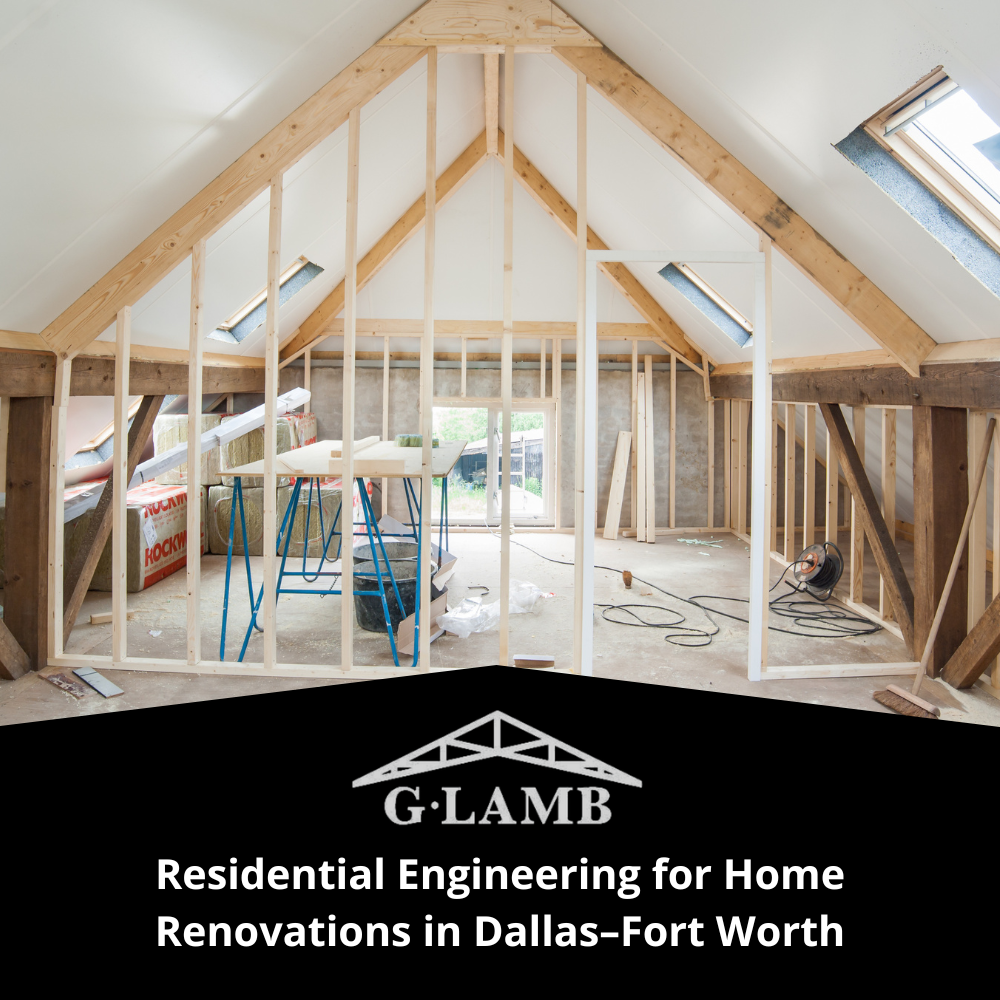
Home renovation engineering is very different from engineering for new construction. Existing homes come with unknowns—older framing methods, previous renovations, foundation movement, and materials that may no longer meet current codes. A qualified structural engineer for remodel projects understands how to work within these conditions while protecting the integrity of your home.
In the Dallas–Fort Worth metroplex, soil conditions, expansive clay, and aging housing stock all play a role in how renovations must be engineered. From minor interior changes to full-scale remodels, structural evaluation ensures that your design ideas can be safely supported. Proper engineering also helps prevent delays during permitting and inspections, keeping your project on track.
By specializing in renovations and alterations, G. Lamb Engineering brings focused experience to these challenges. Our approach emphasizes clarity, constructability, and compliance, so homeowners can move forward with confidence.
Structural considerations when remodeling an existing home
Many renovations involve changes that directly affect the structure of a home. Removing walls, altering roof lines, or expanding rooms can change how loads are distributed throughout the building. Home renovation engineering ensures that these changes are accounted for before construction begins.
Common structural considerations include:
- Determining whether a wall is load-bearing and designing appropriate beams
- Evaluating existing foundations for additional loads
- Confirming framing sizes and connections meet current standards
- Addressing prior construction that may not meet code requirements
Without proper engineering, even well-intentioned renovations can lead to cracking, sagging, or inspection failures. A detailed structural plan helps contractors build correctly the first time, reducing rework and unexpected costs.
Engineering plans and municipal permitting requirements
One of the most overlooked parts of a renovation is the permitting process. Cities across DFW require detailed architectural and structural drawings before approving residential remodels. These drawings must clearly show demolition, proposed construction, and structural details.
A residential engineer DFW homeowners rely on understands how local jurisdictions review plans. Engineering documents prepared for permitting must align with city amendments, adopted building codes, and inspection expectations. When plans are incomplete or unclear, permits can be delayed for weeks or even months.
At G. Lamb Engineering, every drawing set is created with permitting in mind. Structural plans are coordinated with architectural layouts to avoid conflicts and ensure a smoother review process. This coordination saves homeowners time and reduces frustration when working with city departments.
On-site consultations for renovation planning
Some renovation decisions are best made in person. On-site consultations allow engineers to see existing conditions firsthand, identify potential issues early, and discuss realistic options with homeowners. This step is especially valuable for older homes or projects involving structural changes.
During an on-site visit, an engineer can assess framing, foundation conditions, and load paths that may not be visible in photos or previous plans. These insights directly inform safer and more efficient designs. For homeowners, this means fewer assumptions and more accurate planning from the start.
What homeowners care about when hiring a residential engineer
Most homeowners are not looking for complex technical explanations—they want assurance that their renovation will be safe, approved, and built correctly. Clear communication, practical solutions, and responsiveness matter just as much as calculations and drawings.
Homeowners also care about avoiding unnecessary work. An experienced structural engineer for remodel projects knows when existing elements can remain and when upgrades are required. This balance helps control costs while still meeting engineering standards.
Another concern is impartial advice. When an engineer is not selling construction or repair services, recommendations are based solely on performance and safety. This objectivity builds trust and leads to better long-term outcomes for the home.
Supporting renovations through construction and inspections
Engineering support does not have to end once plans are approved. Renovations often reveal conditions that were hidden before demolition began. Having an engineer familiar with the project allows adjustments to be made quickly and correctly.
Mid-construction inspections and certification letters can also help homeowners prepare for city inspections. These reviews provide peace of mind that the work matches the approved plans and engineering intent before municipal inspectors arrive.
Bringing renovation projects together with clarity and experience
If you’re looking for a residential engineer DFW homeowners depend on for renovation projects, G. Lamb Engineering offers a focused, full-service approach built around existing homes. From early consultations to engineered structural plans and permitting support, we simplify the renovation process while protecting your investment. With experience in architectural design, structural engineering, and local building requirements, we help turn renovation ideas into buildable plans that move smoothly from design to construction. Put your home renovation engineering needs in our hands and see how straightforward the process can be.